Tuesday, July 1, 2014

The Planetary Boundary Layer

Inversion over Salt Lake City: January 18, 2013
The Planetary Boundary Layer, or PBL, is the lower part of the atmosphere that interacts with the earth's surface. The two most important interactions that happen in the boundary layer are the transfer of heat and the transfer of water. On a clear summer day, radiation from the sun heats the ground. That heat is transferred to the atmosphere by conduction and convection which causes turbulence in the atmosphere. Water is also transferred to the atmosphere by evaporation. Rising thermals then carry the water vapor up to a level where it cools enough to form clouds and sometimes causes precipitation. In winter months the PBL acts differently and we get inversions that keep the valleys cold. In addition to seasonal variability, the boundary layer undergoes transitions on a daily cycle. Furthermore, the interaction in the PBL are different over oceans, ice, snow, swamps, lakes, mountains, forests, and deserts. Each of these surfaces have unique boundary layer processes that result in different types of weather. For that reason, in order to make accurate weather forecasts it's necessary we understand these different earth-atmosphere interactions. High resolution weather forecasts are largely dependent on accurate equations that simulate the interaction in the PBL.

Spanish Fork Land Use Categories.
Accurate classifications like this are useful
to implement a PBL scheme in a weather model.

Air Quality Talk

Bryce Bird, director of the Utah Division of Air Quality, gave this talk on air quality in Utah:

Air quality continues to be an issue in Utah and many other parts of the country, but we are making progress. Despite the fact that with each year more miles are driven and the demand for energy increases, air quality in Salt Lake City is much better than it was 40 years ago (see 2014 article). This improvement in air quality is a result of new technology and stricter regulations. NASA recently released this image which shows that nitrogen dioxide concentrations have decreased across the country in the last 5 years.
Source: NASA
Air quality monitoring and regulation continue to be important for human health. In a 2010 report, the Environmental Protection Agency stated that for every dollar spent on air quality brings $40 in benefits. (This is much more than NASA's economic benefit which is about an $8 return for every dollar spent.)

Sunday, June 29, 2014

Day Trips from Spanish Fork

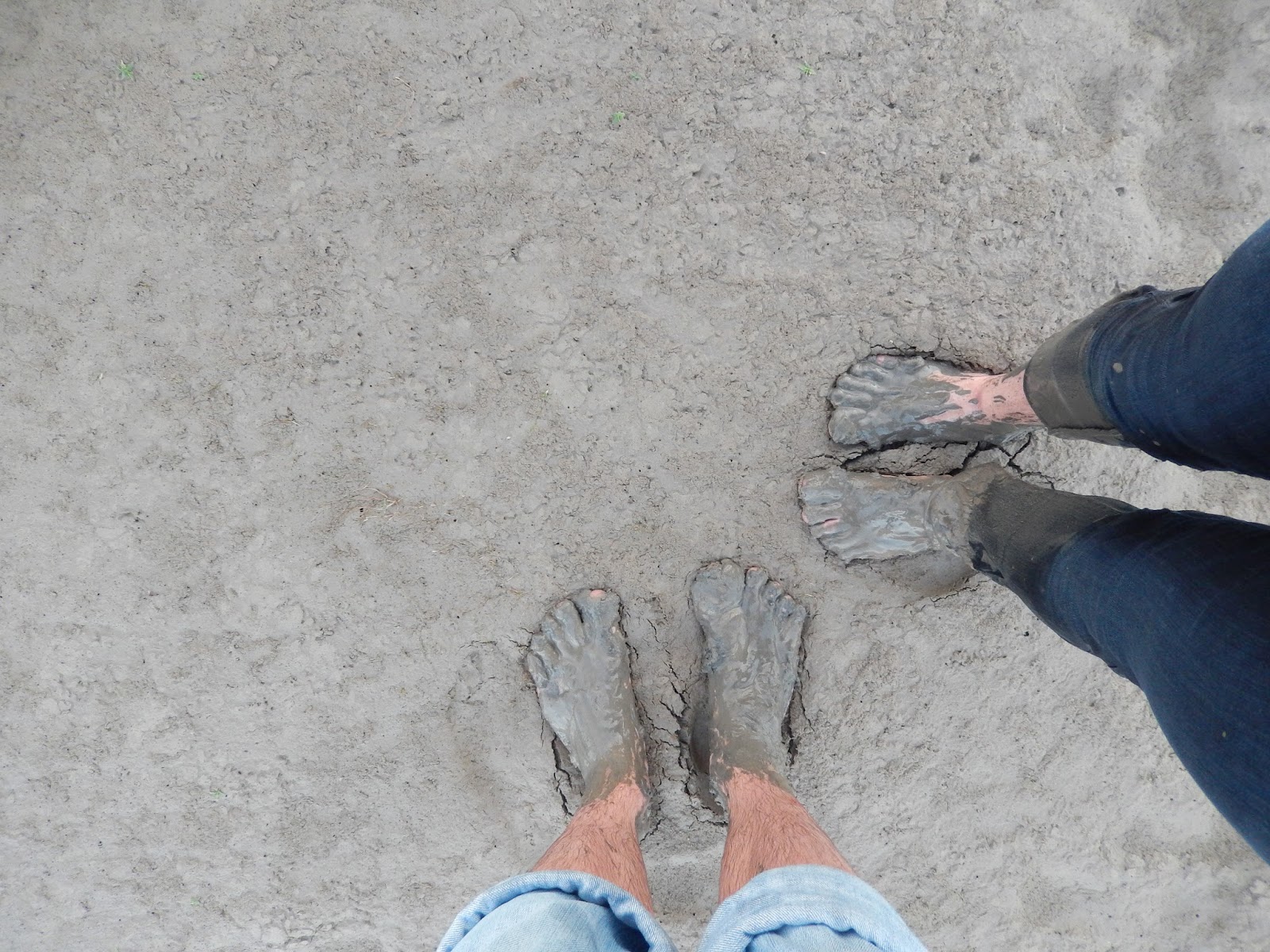
Summer is perhaps my favorite time of year (Christmas is my other favorite time of year). I love any time I spend with my family and enjoy outdoor activities. Just yesterday we hiked to a place called The Grotto a few miles up Payson Canyon and my sister and I played in the mud at Utah Lake. There is so much fun stuff to enjoy just a short drive from my home.

In 2011 I was a famous on-air TV personality for Spanish Fork City Network. I think five people saw me on TV. Anyways, I created this Sunday Night Special called "Day Trips from Spanish Fork." Enjoy!

Friday, June 27, 2014

Who has the best forecasts?

Lots of people tend to blame the weatherman. Here is a good read about weather forecast accuracy: 
http://www.businessinsider.com/the-most-accurate-weather-forecasts-2014-6. 
The author mentions a book called "The Signal and the Noise" by Nate Silver. I've read that book, and it is a very good read.

The below chart is in the article and book. A perfect forecast is along the black line. The NWS comes closest to the black line while the local TV meteorologist are less reliable. On-air meteorologists love to forecast rain more often than it actually occurs. The Weather Channel forecasts are pretty good, but they like to forecast rain when there is a small chance.


Summer: Different Air Quality Issues

In the winter months everyone is concerned about the inversion and PM 2.5 concentrations. Our valley inversions especially get a lot of attention because they obstruct visibility. Summer comes with its own pollution problems--ozone.

Below are the trend charts for ozone and PM 2.5 for Salt Lake City.

Yesterday's storms cleaned us out, but our ozone levels have been inching high the last few days. 

You may have heard of ozone being a good thing in the stratosphere--it protects us from dangerous UV radiation--but breathing ozone is not good for you. 

Where does ozone come from? It is a product of fossil fuel burning cooking in the sun.

The Uintah Basin is a "special case" for ozone pollution. We often observe extremely high concentrations in the winter months, but in the summer there is usually less than Salt Lake, as shown in the chart below.

(Oh, and the spikes in the PM 2.5 yesterday were likely caused by gusty winds associated with the storm front.)